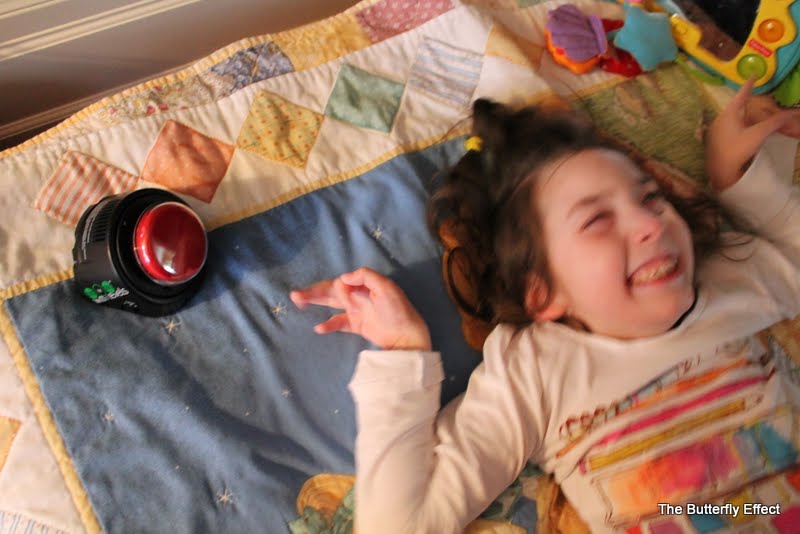
I am sure many people who don't personally know a child like Sophie wonder what other children would have in common with her. What would they do to play?
She can't talk. She can't dance. She can't run. She can't sit up on her own. She can't hold a toy. She can't sing. She can't play games. She often can't see. She can't read.
It may seem to a stranger that all those things are true, or even to someone that doesn't know Sophie very well. But those that get to know her, know different.
Sophie can do all those things, just not in the typical way. And even the things that she can't do at all, it doesn't matter to her friends.
It doesn't matter. They carry on and either help her to do it or find a way to do it differently with her or do something completely different.
This is friendship. This is life as Sophie's friend. It is the child who doesn't see the stereotypes, that adults and children who don't know a child like her sometimes hold.
And somehow these children in her life know that Sophie loves them right back. They see how she watches them, learns from them. They don't need her to tell them, they just know. It goes beyond words.
This is what inclusion brings to our life, to Sophie's life, to their life. This is why we believed so strongly that Sophie should go to her home school with her brother, with children from our neighbourhood. Children that she will grow up with and lean on
and give something back to.
This is what I dreamed of for my children. To be happy and safe and loved. To know true friendship and to be proud of their accomplishments.
This is just grade one, but it's going to be hard to beat.